When the Dog's Knee Costs £4,000: Pet Cover Maths UK Owners Keep Skipping in 2026
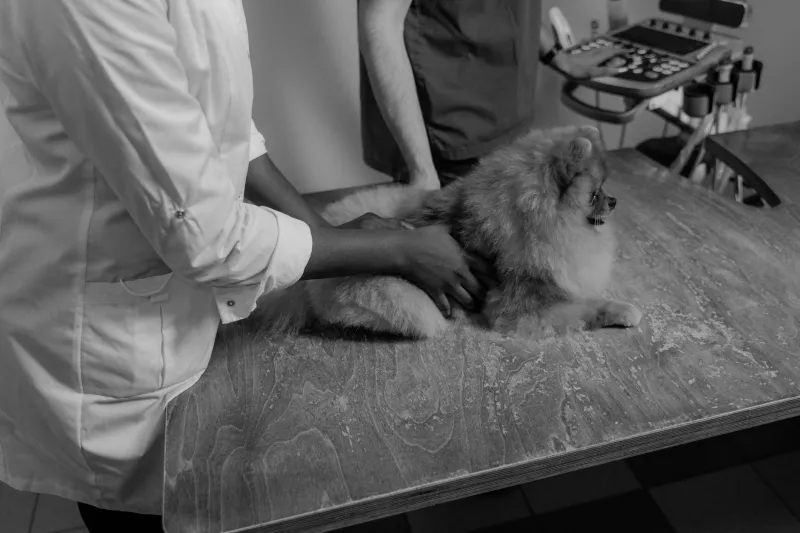
A friend of mine has a cocker spaniel with no self-control and excellent taste in orchard fruit. Two summers ago that dog ate a peach stone, spent a night on fluids and came home with a shaved leg and a bill for just under £2,800. My friend had no cover. The dog is fine. The credit card took eleven months to recover.
That story is why most people buy pet insurance. It's also why the industry can charge what it charges. But in 2026 the arithmetic has shifted: premiums have climbed hard, excesses have crept up, and a growing number of owners are asking a fair question — would I actually be better off putting that £40 a month somewhere else?
There's no universal answer. There is, however, a decent way to think about it.
What a genuinely bad night at the vets costs now
Forget the £60 consultation. The bills that hurt are the ones that arrive at 2am from an out-of-hours hospital.
Ballpark figures UK owners are seeing in 2026: an emergency consultation £250–£400; an overnight inpatient stay £400–£1,200 a night; an MRI or CT scan £1,800–£3,000; cruciate ligament surgery £2,200–£4,000 per leg; removing a swallowed foreign body £1,500–£3,000; spinal surgery £5,000–£8,000; and a full course of cancer treatment comfortably into five figures before you've paid for the parking.
Five-figure bills used to be a rarity. They're now a routine part of the conversation, and the Competition and Markets Authority's long-running investigation into the veterinary market has added public pressure around price transparency and prescription charges. Useful for consumers, but it hasn't made anything cheaper.
Why the premium keeps going up
Three things are pushing at once. Claims inflation (the bills above), consolidation (independent practices absorbed into large groups, with less local price competition), and — ironically — better medicine. A dog that would have been put to sleep in 2010 is now treatable, and treatable means expensive.
So a healthy two-year-old crossbreed might still cost £20–£30 a month to insure, while a four-year-old French bulldog in a city postcode can easily hit £70–£90. Cats sit lower, but not by as much as they used to.
The small print does more work than the headline
Before comparing quotes, understand these four dials, because they decide whether your policy pays £4,000 or £400.
- Excess. Often £99–£250, and many policies add a percentage co-payment (15–20%) for pets over a certain age. On a £5,000 claim, a £200 excess plus 20% co-pay leaves you £1,200 out of pocket.
- Pre-existing conditions. Anything your vet noted before cover started — including a bit of a limp that turned out to be nothing — is typically excluded. Permanently, on most policies.
- Lifetime vs time-limited vs money-limit. Lifetime cover resets the pot each year; the other two don't. If your dog develops a lifelong condition like epilepsy or diabetes, only a lifetime policy keeps paying.
- Fee caps. Some insurers cap payouts at their own view of a "reasonable" fee, which may be well under what your referral hospital charges.
Three households, ten years, three different answers
| Owner | Situation | Premiums paid over 10 years | Claims received | Who won |
|---|---|---|---|---|
| Household A | Labrador, healthy, one swallowed toy and one ear infection | ~£4,900 | ~£3,300 | Self-insuring |
| Household B | French bulldog, BOAS surgery, skin and ear problems | ~£6,800 | ~£9,600 | Insurance |
| Household C | Rescue cat insured at 2, cancer at 9 | ~£3,400 | ~£5,100 | Insurance |
The pattern is obvious once it's laid out: insurance is a bad deal for the lucky and a very good deal for the unlucky. Which means the question isn't "is it worth it?" but "how likely is my particular animal to be unlucky?"
Running the self-insurance route honestly
Put £35 a month into a separate account — a cash ISA works fine — and after ten years at a modest 4% you're sitting on roughly £5,150. Increase it to £50 a month and it's about £7,400. If you'd also started with a £1,000 float, add another £1,500 or so of growth.
That's a real cushion. It covers a cruciate repair with change, or a foreign body plus the follow-up. It does not cover spinal surgery and a cancer course in the same year, and it is completely gone if two expensive things happen early.
The bigger catch is behavioural. Most people who cancel cover don't ring-fence the money — it dissolves into the general current account and gets spent on a boiler or a holiday. If you can't genuinely run a separate pot and leave it alone, self-insurance is a theory rather than a plan. The other catch is timing: you can start a sinking fund at any age, but you can only start an insurance policy while your pet is still healthy.
A decision framework you can actually use
Work through these in order:
- Could you find £3,000 in 48 hours without borrowing? If not, insure. This single question settles it for most households.
- Does your breed or type carry known expensive predispositions? Flat-faced dogs, Cavalier King Charles spaniels, German shepherds, Ragdolls, Labradors with elbow and hip issues — the odds move sharply against you.
- Is your pet already older or carrying a noted condition? Realistically, cover will be limited or priced out. A sinking fund may be the only honest option left.
- Have you claimed before? Once a condition is on your record, moving insurers usually means losing cover for it. That's a strong argument for staying put.
- Would you genuinely leave the pot alone? Be brutally honest.
There is a middle ground
You don't have to pick between a £70-a-month lifetime policy and nothing. Accident-only cover is cheap and covers the trauma bills that arrive without warning. A higher voluntary excess can cut premiums by a quarter or more. Some owners run a modest policy for the first few years and build a fund alongside it, then reassess at age eight or nine — though remember you can't rewind that decision.
If money is genuinely tight, check whether you qualify for PDSA or Blue Cross support schemes, and ask your practice about their own payment plans. Nobody should be choosing between a vet and a rent payment without knowing what help exists.
The bottom line
Pet insurance in 2026 is expensive because veterinary medicine got expensive. For a young, healthy, high-risk-breed pet and a household without a cash buffer, it's still one of the better-value direct debits in the house. For a healthy crossbreed with a well-funded sinking pot and a disciplined owner, it's arguably optional.
What isn't optional is deciding deliberately. The worst position is paying £50 a month for years without knowing what your policy excludes — then discovering it at the worst possible moment.